Who He Was
About Tarun Sagar Ji
A monk who chose truth over comfort — every single day, for 37 years.
The Beginning
A Child Unlike Others
Tarun Sagar Ji was born on June 26, 1967, in the small town of Dhamnod in Madhya Pradesh, India. His birth name was Vikram Kumar Jain. Raised in a devout Jain family, he was immersed in the principles of ahimsa, satya, and aparigraha from his earliest years.
Even as a young child, Vikram showed an unusual maturity — a detachment from material things and a burning curiosity about the nature of truth and the purpose of human existence. While other children played, he would sit quietly and observe. While others sought entertainment, he sought meaning.
His family recognised this early. Elders in the household noticed that the boy asked questions no child his age should be asking — questions about death, about duty, about what it means to live well. They had no idea that those questions would shape the spiritual landscape of an entire nation.
The Great Turning
Diksha at Fourteen
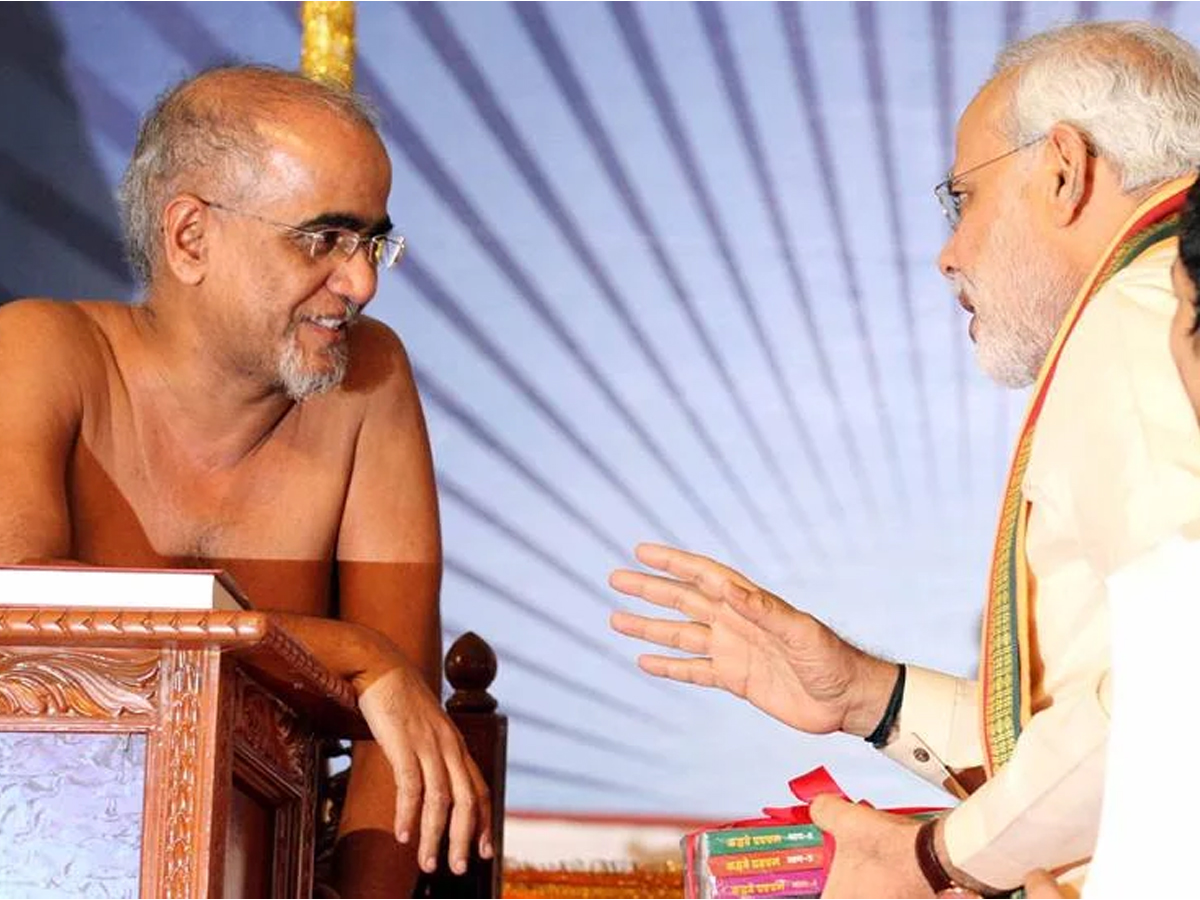
At the age of 14, Vikram Kumar Jain took Digambar Jain diksha — the sacred monastic vow of complete renunciation. He became Muni Tarun Sagar. He owned nothing. He carried only truth.
The Digambar tradition — one of the two main sects of Jainism — requires its monks to renounce all clothing, all possessions, and all physical comforts. They walk barefoot. They eat once a day, standing, accepting food only from a layperson's hands. They sleep on the ground. They endure heat and cold without shelter.
Vikram Kumar Jain chose this path at fourteen. Not from despair. Not from pressure. From clarity. He saw the world for what it was — and chose what he believed to be real.
The Monastic Life
What It Means to Be a Digambar Monk
No Possessions
A Digambar monk owns nothing — not a coin, not a book, not a piece of cloth. Every material thing is surrendered. What remains is the self, stripped bare, confronting truth without insulation.
One Meal a Day
He ate once a day, standing, received directly from the hands of a lay devotee. The food was accepted silently, gratefully, without preference. Hunger was not an enemy — it was a teacher.
Barefoot Always
He walked barefoot — across the plains of Madhya Pradesh, through the streets of Delhi, into halls where thousands waited. The earth beneath his feet was not a hardship. It was a reminder.
Absolute Celibacy
For 37 years, from the age of 14 to his Mahasamadhi, he maintained complete celibacy — in body, speech, and thought. This was not repression. It was redirection — channelling all energy into truth.
No Night-Time Travel
Jain monastic code prohibits travel after dark to prevent harm to the smallest creatures. Even his movements were governed by a discipline that saw life in every grain of dust.
The Peacock Feather
His only 'possession' — the rajoharana, a brush made of shed peacock feathers, used to gently sweep insects aside before sitting or lying down. Non-violence, even in the smallest act.
The Character
Four Defining Qualities
Fearless
He spoke to kings and ministers the same way he spoke to farmers — without fear, without favour, without flattery. He addressed the Haryana State Assembly without a tremor. He called out corruption from the very stage it sat upon.
Compassionate
Beneath the bluntness was boundless compassion. He was bitter because he cared — deeply, completely — about the spiritual elevation of every human being who listened. His harshness was love with no patience for comfortable lies.
Direct
No metaphors to hide behind. No polite ambiguity. He said exactly what needed to be said, to whoever needed to hear it. He was not rude — he was precise. There is a profound difference between the two.
Disciplined
37 years of monkhood with no deviation. No compromise on vows. No softening of rules in moments of discomfort. He did not merely preach discipline — he was the embodiment of it, every waking moment of every day.
Power & Truth
He Never Spared the Powerful
One of the most remarkable aspects of Tarun Sagar Ji's personality was his complete fearlessness in front of political power. He addressed chief ministers, parliamentarians, and even a national legislature — and in every case, he spoke the same truth he would speak to a gathering of common people.
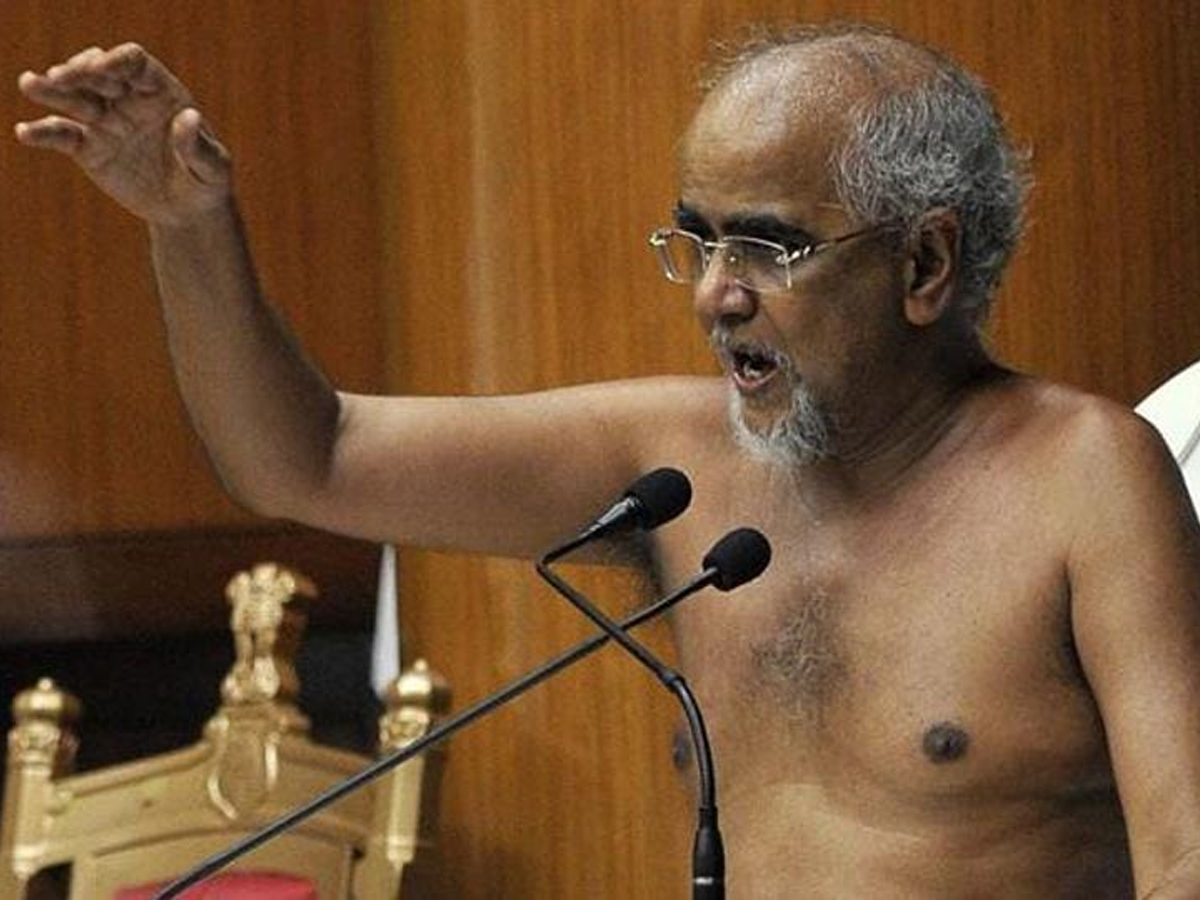
In 2001, he became the first Digambar Jain monk in recorded history to address an Indian state legislature — the Haryana Vidhan Sabha. Seated politicians listened in silence as he told them, plainly, what their duties were and how far short they fell. No one walked out.
His message to power was always the same: “You were given authority to serve — not to accumulate. Not to sustain yourself. Not to protect your party. Every rupee that passes through a corrupt hand leaves a stain that no ritual can wash clean.”
I do not speak differently to the powerful. Truth has only one form. It does not wear different clothes depending on who is sitting in the audience.— Muni Tarun Sagar Ji
The Lighter Side
Sharp Wit, Warm Heart
What surprised first-time listeners most was his humour. The Kadve Pravachan were not grim lectures — they were alive with wit, irony, and a deep playfulness that made the truth easier to swallow even as it cut deeper.
He would tell stories about kings who forgot they were servants, businessmen who thought money would buy them out of their karma, and priests who memorised scripture but forgot to live it. The audience would laugh — and then fall silent as the joke resolved into something far more serious.
His humour was never unkind. It was surgical. A scalpel, not a club. He made people laugh at the truth so they could accept it without the armour of defensiveness.
“A man goes to the temple every morning and lies every evening. God must wonder: when does this man plan to change his schedule?”
— Muni Tarun Sagar Ji“We fast for God, we pray for God, we offer flowers to God. But when it comes to being honest — God can wait.”
— Muni Tarun Sagar JiThe Final Chapter
Grace Until the End
In the final years of his life, Tarun Sagar Ji faced serious health challenges with the same equanimity he brought to everything else. He did not seek sympathy. He did not curtail his discourses. He continued to speak, to teach, to confront — even as his body weakened.
On September 1, 2018, Muni Tarun Sagar Ji attained Mahasamadhi in New Delhi — the Jain term for a monk's conscious departure from the body. He was 51 years old. He had lived as a monk for 37 of those years.
The nation grieved. Tributes poured in from across all faiths, all parties, all walks of life — politicians and farmers, judges and students, believers and sceptics. Even those he had criticised most sharply came to pay their respects.
His body was gone. His words were not.
Death is not the opposite of life. Death is a part of life — and a monk who has truly lived does not approach it with fear. He approaches it the way he approaches everything: with truth.— Muni Tarun Sagar Ji
Continue the Journey
Explore the teachings that shaped a generation, the books that carry his voice forward, and the legacy that lives on.